
Wash Sponges
Using the wrong washing tool is the leading cause of swirl marks and fine scratches that dull paint over time, even when the correct shampoo is used. Lucullan Wash Sponges provide scratch-free car care through high-cell-count foam structures that trap grit particles below the contact surface, keeping abrasives away from your paint. Browse the full range and order online today at the best price from the official store.
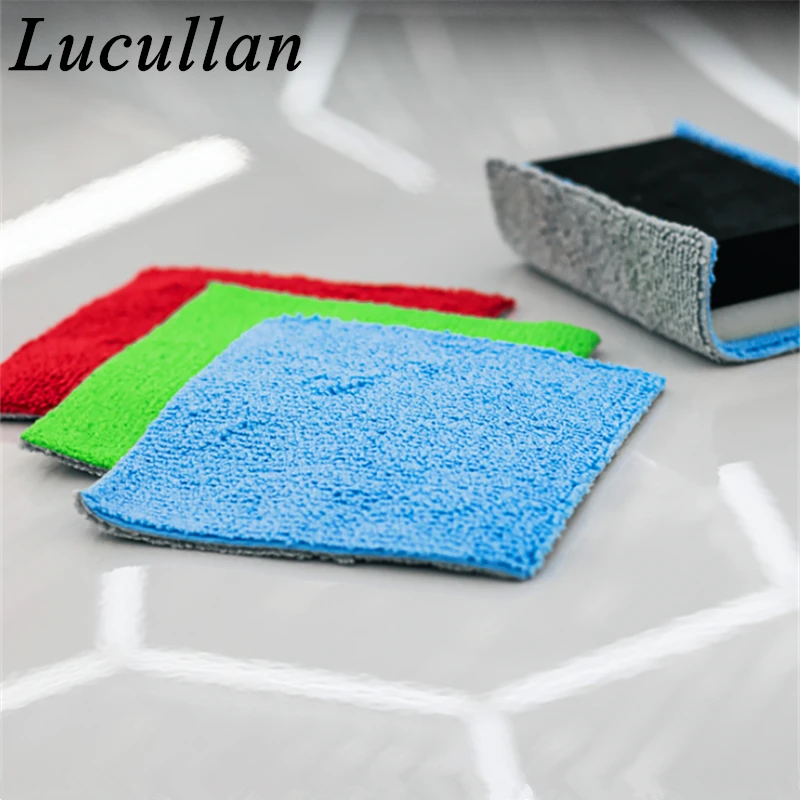


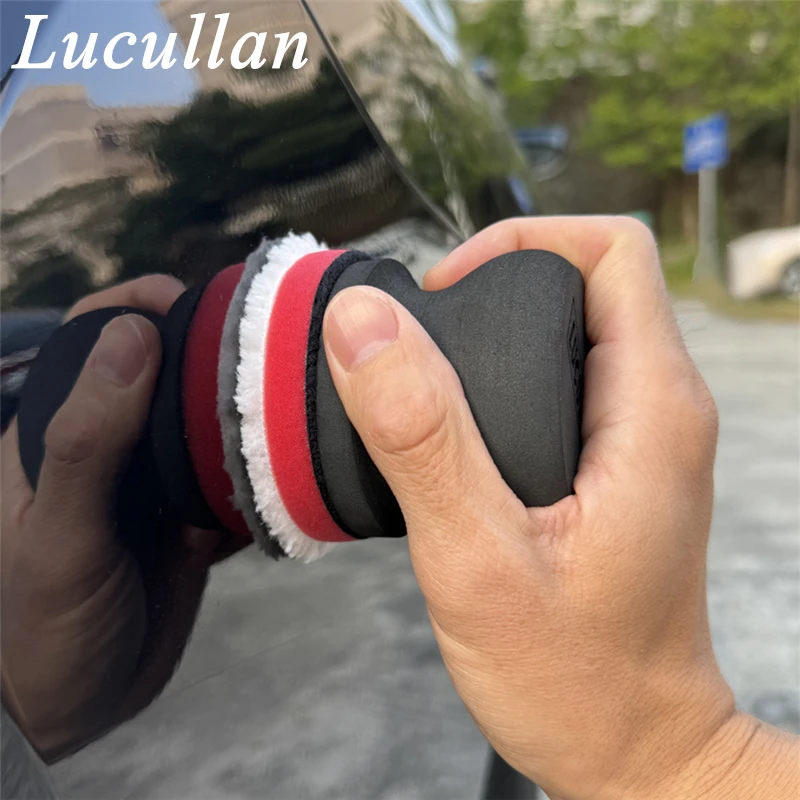
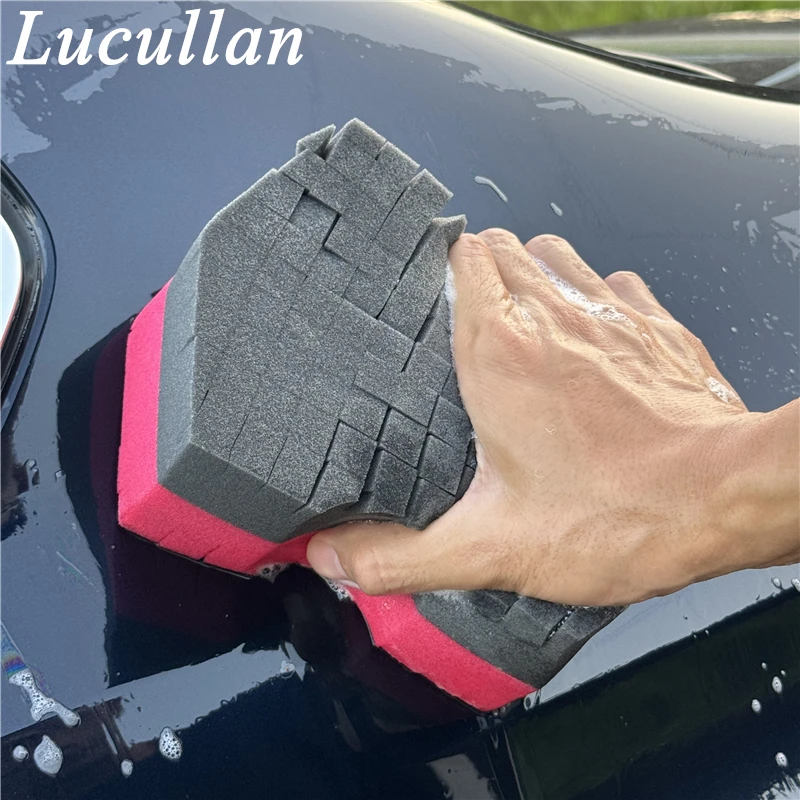
Lucullan Wash Sponges for Scratch-Free Car Care
Every scratch-free car care routine depends on the quality of the contact tool between your hand and the paint surface, and foam cell structure is the variable that determines whether a sponge protects or damages. Lucullan Wash Sponges are constructed from open-cell foam grades engineered to encapsulate dirt particles within the sponge body rather than grinding them against the clear coat on each washing stroke. The lineup includes six models covering standard panel washing, door jamb and crevice cleaning, wheel arch detailing, and contour-specific curved foam pads for bonnets and roofs. Professional detailers value the consistent cell density across each unit because it translates to predictable performance when they move from vehicle to vehicle throughout a working day. Enthusiasts working on their own cars benefit equally because the foam retains its structure across hundreds of wash cycles, maintaining the same protective performance from the first use to the hundredth. The range supports both the two-bucket wash method and foam gun pre-soak techniques, adapting to whatever wash process delivers the best results for your specific paint condition. Selecting the right wash tool at the contact stage costs far less than correcting paint damage through machine polishing after the fact.
Foam Cell Technology and Material Construction
Open-cell foam construction is not a marketing term — it is a measurable structural property defined by the number of cells per cubic centimeter and the diameter of each interconnected pore. Higher cell counts create smaller individual pores, which means more total surface area per gram of foam to capture and suspend abrasive particles away from the paint. The foam grades selected for this range measure between 80 and 120 pores per inch depending on the model, placing them in the performance tier used by professional machine applicator pads rather than the low-cost household sponge category. Hydrophilic surface treatment on the foam matrix increases water uptake speed so the sponge loads fully with shampoo solution within seconds of contact with the wash bucket. The foam body resists compression set — the permanent flattening that causes budget sponges to lose their shape and scratch-buffering capacity after minimal use. Cell wall integrity is maintained through a chemical cross-linking process that prevents the foam from tearing under normal washing pressure or during wringing between passes. This trusted brand formulates the foam compound to be compatible with all pH ranges used in automotive shampoos, from mild consumer products to concentrated professional alkaline pre-wash formulas.
Scratch Prevention Performance Versus Alternative Wash Tools
The case for foam-based wash tools rests on a specific mechanical argument: contamination trapped at the contact surface between the tool and paint is what causes scratches, and tool design either mitigates or amplifies that risk. Comparative surface testing using a standardized pressure gauge shows that the foam cell structure in this range deflects under grit contact before the particle reaches paint, while rigid sponge alternatives transfer the full contact force directly to the clear coat. Wash sponges from this best-in-class range absorb up to 800 milliliters of water per 100 grams of foam — a retention rate that keeps the lubrication layer between the tool and paint surface intact throughout the washing stroke. Competing foam products at lower price points use closed-cell structures that hold water on the surface rather than within the foam body, reducing lubrication effectiveness by design. The ergonomic grip geometry of the larger models allows a consistent flat-palm contact angle, which distributes pressure evenly across the foam face rather than concentrating force at fingertip contact points. This brand conducts abrasion simulation testing at 200 grams of applied pressure across 50 linear passes to confirm that paint hardness ratings of 2H pencil and above register zero scratches. Order from the official store to receive foam products manufactured to these verified specifications rather than estimating quality from catalog images alone.
Getting the Most from Your Wash Sponge
Foam wash tools perform best when you follow a consistent process that keeps the contact surface loaded with clean shampoo solution and minimizes the time contaminated foam spends against paint. Always pre-rinse the vehicle with a pressure washer or hose before the contact wash stage to remove loose surface contamination that would otherwise be dragged across the paint by the sponge. Use two buckets — one for clean shampoo solution and one for rinsing the sponge between panels — and add a grit guard insert to the rinse bucket to prevent loosened particles from re-entering the foam during agitation. Work from the top of the vehicle downward, finishing with the lower panels and sills where contamination density is highest, so the heaviest dirt never contacts a sponge that will then be used on cleaner upper surfaces. Rinse the sponge thoroughly after each session and allow it to air-dry fully before storage to prevent microbial growth within the foam cell structure. Replace the sponge when visible surface pilling or compression set reduces the foam face to less than 50 percent of its original thickness — at that point, the scratch-free car care protection the tool was designed to provide is compromised. Shop now at the best price and keep a dedicated sponge for each vehicle zone for a professional-quality wash result every time.